
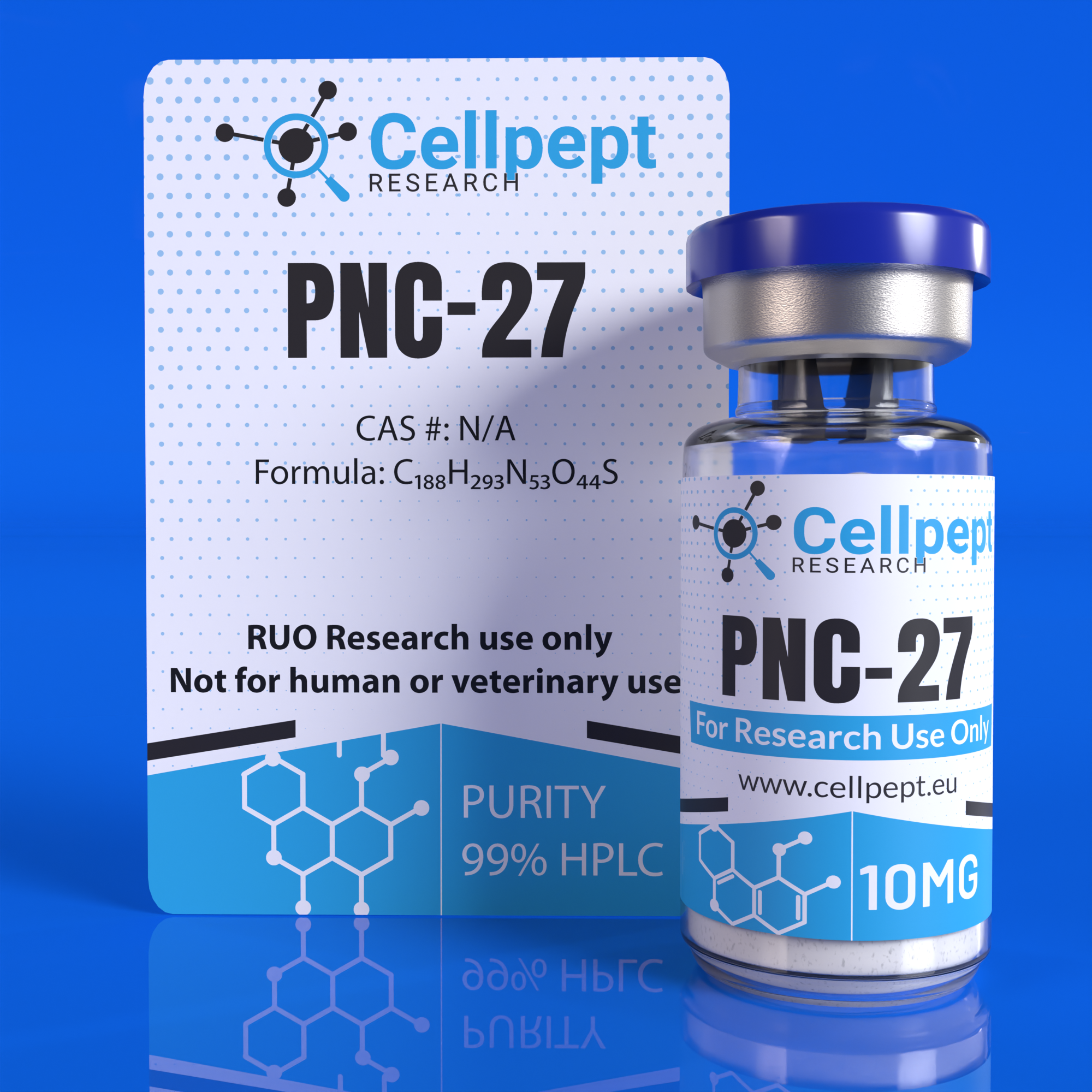
PNC-27 10mg
€ 185,00
PNC-27 is a synthetic peptide derived from the HDM-2–binding domain of the tumor suppressor protein p53, conjugated to a membrane-penetrating leader sequence. It was developed as a structurally defined research tool to investigate selective cancer cell membrane disruption and p53-associated anticancer mechanisms.
In biochemical and cellular research models, PNC-27 has been shown to preferentially interact with HDM-2 proteins expressed on the surface of certain cancer cells, leading to membrane pore formation and rapid necrotic cell death. Experimental studies focus on peptide–membrane interactions, cancer cell selectivity, and downstream signalling effects under controlled conditions. Observed effects depend on experimental design, concentration, and model system.
-
- Mechanism: PNC-27 binds to HDM-2 (a p53-inhibitor) on cancer cell membranes, creating transmembrane pores that lead to cell lysis.
- Selectivity: Studies indicate it kills a wide range of cancer cell lines (e.g., HeLa, MDA-MB-468) while sparing normal, non-transformed cells
.
- Structure: It is a chimeric peptide consisting of a p53-derived HDM-2-binding domain and a transmembrane-penetrating domain.
- Research Status: Primarily studied in in vitro and in vivo animal models.
PNC-27 Janoshik Heavy Metals Results
*Comes with 3ml vial of bacteriostatic water*
Reviews
Clear filtersThere are no reviews yet.